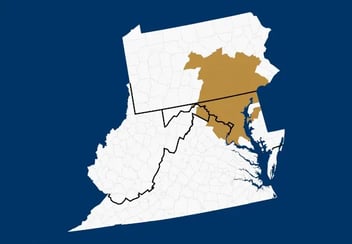



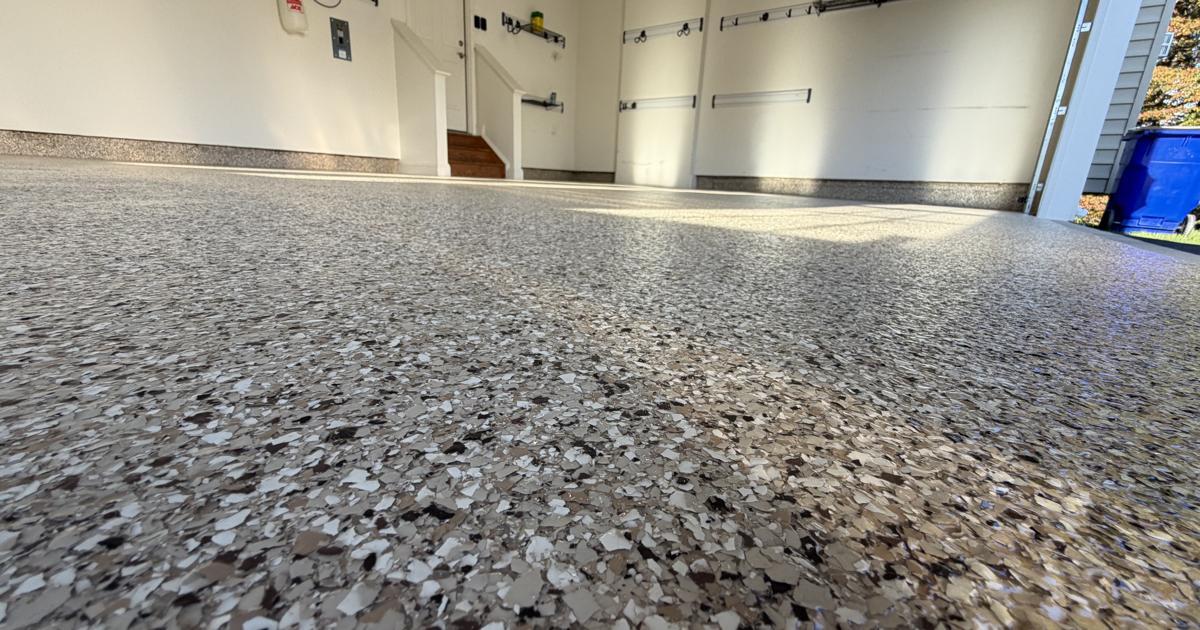
Hiring the wrong person to coat your garage floor can cost you thousands before the first winter is over. Peeling, bubbling, and delamination within months are common when homeowners skip the vetting and research process. Our Stronghold Floors team has spent 20+ years watching these failures unfold across Maryland, Pennsylvania, and Virginia.
This article walks you through eight factors that separate a qualified residential epoxy flooring installer from one who will leave you with a floor that needs to be redone in short order. Each factor is grounded in what actually determines whether a coating lasts 15 to 20 years or peels in months.
I wrote this article to expand upon something I published in 2025 - How to Choose the Best Garage Floor Coatings Contractor, because we continue to see many newer companies attempting to install garage floor coatings because they think it's "easy money" or a franchisor sold them on how easy a business it is to operate. We keep seeing these same companies fail within a few years and leave homeowners with poorly performing coatings that only served as money wasted. Just to quantify this, we saw our "competition" grow from around a dozen companies in 2021 to over 50 in 2026.
What to Look for When Hiring Epoxy Floor Installers
1. Verify Their Surface Preparation Method
Surface preparation determines whether a coating bonds to your concrete or sits on top of it. The International Concrete Repair Institute (ICRI) publishes a concrete surface profile scale that rates roughness from CSP 1 to CSP 10. Most epoxy and polyaspartic systems require a CSP 2 or CSP 3 to achieve proper mechanical bond.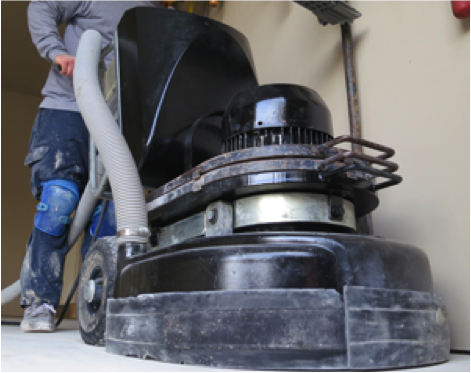
A qualified installer uses planetary diamond grinders connected to powerful dust extractors (not just Shop Vacs). This process opens the concrete's pores without chemical hazards. Relying solely on acid etching rarely produces a consistent profile and can leave chemical residue that weakens adhesion. Acid etching cannot get past existing sealers, coatings or contaminants that bead water.
While shotblasting is an effective surface preparation method for some coating systems, garage floor coatings are often not thick enough to deal with the aggressive concrete surface profile.
2. Ask About Coating System Layers and Thickness
A professional installer should name every layer in the system: primer (if needed), base coat, decorative chip broadcast, and top coat(s). Each layer serves a specific function. The base coat provides chemical adhesion and carries the decorative chip, while the polyaspartic top coat delivers UV stability and abrasion resistance.
Total dry film thickness matters. Industry-grade systems typically build 18 to 25 mils of total coating. If an installer cannot tell you the mil thickness (dry) of each layer, that is a clear signal to keep looking. Coatings kits purchased at big box store do NOT have the mil thickness necessary for long-term performance.
3. Read the Written Warranty Before You Sign
A “lifetime warranty” means nothing until you read what it covers. Ask whether adhesion failure is specifically included, whether the warranty transfers if you sell your home, and who honors it if the franchise location closes next year.
Reputable installers put their warranty terms in writing and explain every exclusion plainly. Stronghold Floors provides warrantied garage floor coatings with clear, written documentation so you know exactly what is covered, what is excluded, and what conditions apply before any work begins.
4. Confirm Licensing, Insurance, and Business Standing
A legitimate flooring contractor carries general liability insurance and workers’ compensation for employees. If a worker is injured grinding your slab and the contractor lacks workers’ comp, your homeowner’s insurance may not cover the claim.
Check licensing for your state. In Maryland, contractors need an MHIC license. Pennsylvania requires an HIC registration. Virginia and West Virginia each have their own contractor licensing requirements. A company that has been in business since 2004 with active licenses in multiple states is a different proposition than a crew that appeared last season.
Do not assume that a franchise will have all the necessary licenses. Often, they only have the license necessary for their home state, but are not registered, licensed or insured in neighboring states.
5. Evaluate Regional Experience and Climate Knowledge
Humidity, temperature swings, and moisture vapor emissions from concrete slabs all affect how coatings cure and bond. A contractor who has installed thousands of floors in your region understands these variables firsthand and adjusts application accordingly.
Stronghold Floors has completed over 9,000 projects across Maryland, Pennsylvania, Virginia, and West Virginia since 2004. That kind of regional volume means the crew has diagnosed and solved sweating slabs, high moisture vapor in older homes, and freeze-thaw cycling that destroys improperly bonded coatings in this climate.
6. Review Their Portfolio and Verified Customer Reviews
Ask for before-and-after photos of completed projects in your area. Verified Google reviews that include photos and project details are difficult to manufacture in volume and tell you far more than a polished sales pitch ever will.
With over 1,100 verified reviews and a 4.9 rating, Stronghold Floors has a documented track record you can evaluate for yourself. Check whether the company participates in local builder partnerships, too. Trusted builders like Toll Brothers and DRB Homes do not attach their names to unreliable subcontractors.

7. Understand the Installation Timeline and What It Means
Installation speed is not a selling point when it compromises bond strength. Polyaspartic coatings cure fast, but the concrete still needs proper grinding, crack repair, and priming before any resin goes down.
A responsible installation schedule typically spans one and a half to two days. This allows proper cure time between coats and gives the primer time to penetrate the concrete. Crews who promise to grind, prime, coat, and broadcast all in a single day are often cutting corners that show up as peeling within the first year (from the concrete itself or between the coating layers).
8. Ask How They Handle Concrete Repairs and Problem Slabs
Not every garage floor is in perfect condition. Cracks, spalling, expansion joints, and previous failed coatings all require specific repair techniques before a new system can be applied successfully.
A qualified installer will assess concrete condition during the estimate, not after showing up on installation day. They should explain how they address cracks and what repair materials they use for filling and leveling. If the answer is “we coat right over it,” that is your cue to get another estimate.
How Stronghold Floors Helps You Choose the Right Installer
Finding a qualified epoxy floor installer takes homework, but the payoff is a coating that performs for years instead of months. The factors above apply to every contractor you evaluate, whether you are in Annapolis (MD), Harrisburg (PA), or Leesburg (VA).
Stronghold Floors publishes a free contractor checklist you can use to compare any installer side by side. With 20+ years of experience and over 9,000 completed projects, Stronghold Floors sets the standard for professional garage floor coatings in the Mid-Atlantic.
If you are in our service area, give us a call. We would be happy to help.

FAQs About Hiring Epoxy Floor Installers
What surface preparation method should an epoxy installer use?
Mechanical diamond grinding is the standard for achieving a proper concrete surface profile. It opens the pores of the slab so the coating bonds mechanically into the concrete rather than sitting on the surface. Acid etching is not sufficient and shotblasting may be too aggressive.
How thick should a professional garage floor coating be?
A quality system typically builds 18 to 25 mils of total dry film thickness across all layers. Stronghold Floors applies industry-grade materials measured in mils to ensure long-term durability and abrasion resistance.
Why do some garage floor coatings peel within the first year?
Peeling almost always traces back to inadequate surface preparation, insufficient cure time between coats, or moisture that was not identified and addressed before coating. Proper testing and grinding prevent these failures.
Should I choose the installer with the lowest bid?
A low bid often reflects shortcuts in surface preparation, thinner coatings, or weaker warranty coverage. Compare the full scope of work, materials, and warranty terms rather than the bottom-line number alone. Reinstalling low cost coatings several times will quickly cost more than professionally installed, warrantied coating that last 15+ years.
How long does a professionally installed epoxy floor last?
A properly prepared and coated garage floor using professional-grade epoxy and polyaspartic materials can deliver 15 to 20 years of reliable service. Longevity depends on preparation quality, coating thickness, and proper maintenance.
Does it matter if my epoxy installer is local to my region?
Regional experience directly affects coating performance. Local installers understand area-specific humidity, temperature ranges, and concrete conditions. Stronghold Floors has installed coatings across the Mid-Atlantic since 2004, giving crews deep familiarity with local slab conditions.